4th Floor, PMC, 3rd Parklands Avenue, Nairobi
Mon–Fri: 9:00am–5:00pm   Sat: 10:00am–3:00pm
Home About Services Facilities + Laboratory Pharmacy Blogs Book Appointment
Kidney Stone Management

Kidney stones treated without a single incision

ESWL — Extracorporeal Shock Wave Lithotripsy — uses precisely focused shock waves, generated outside your body, to break kidney and ureteric stones into fragments small enough to pass naturally in your urine. No cuts. No hospital stay. Home the same day.
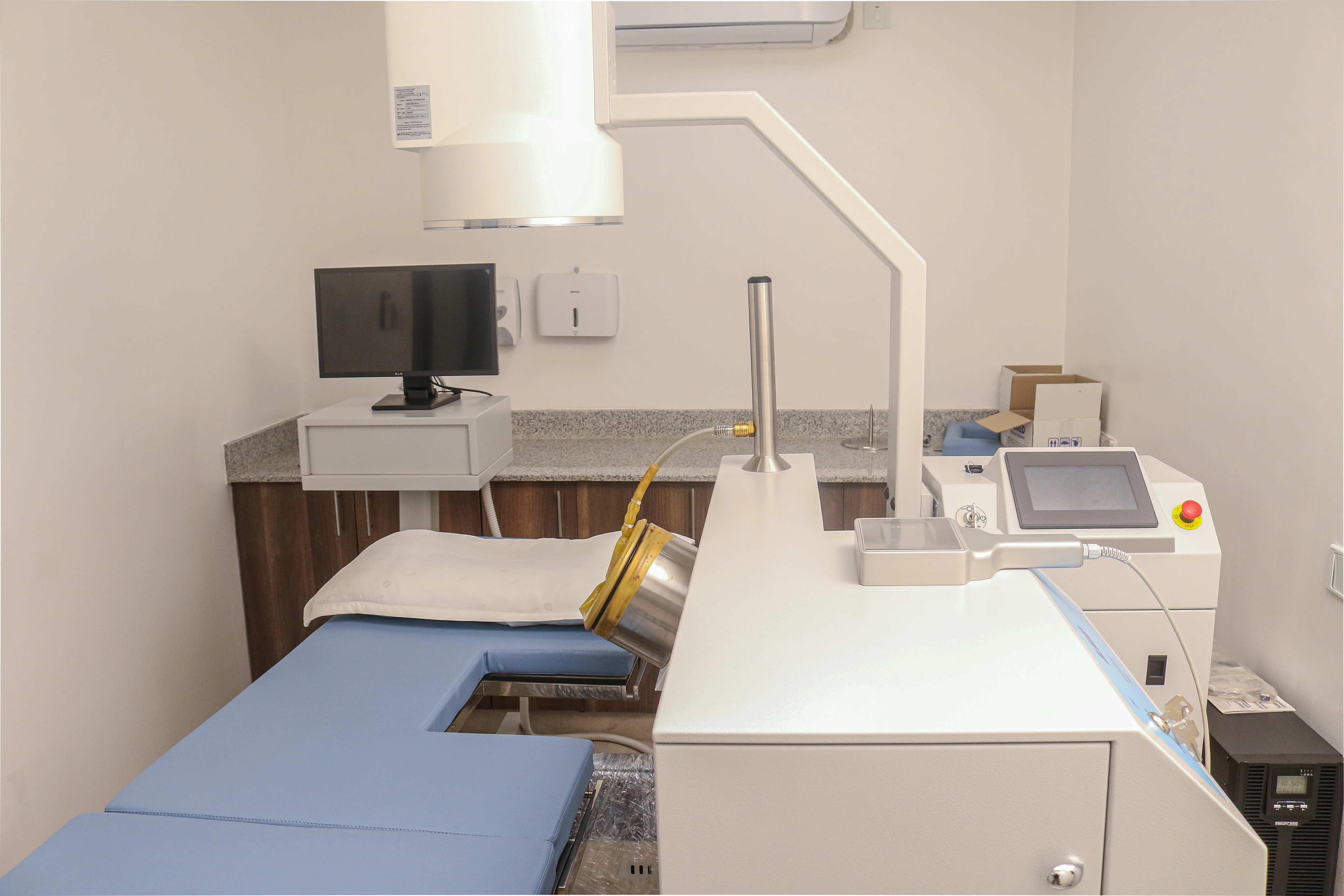
ESWL shock wave lithotripsy machine at URO-CARE Urology & Andrology Center, Parklands, Nairobi
1 of only 2 in Kenya
0
Incisions
45–60
Minutes per session
Same day
Discharge home
1–2 days
Back to normal activity
Understanding the Treatment

What is ESWL?

Extracorporeal Shock Wave Lithotripsy is the least invasive way to treat kidney stones. "Extracorporeal" simply means "outside the body" — the entire treatment happens without any instrument entering you.

You lie comfortably on the treatment table while our specialists locate your stone precisely using imaging. The machine's therapy head is then positioned against your skin, and thousands of focused shock waves pass harmlessly through your body tissue, converging only at the stone itself — crushing it into sand-like fragments.

Over the following days and weeks, those fragments pass naturally when you urinate. Most patients describe the procedure as a repetitive tapping sensation, managed easily with light sedation and pain relief.

Kidney stone treatment consultation at URO-CARE Nairobi
The Procedure

How ESWL Works

Four simple stages — from arrival to walking out the same day.

01

Precise Targeting

Your stone is located to the millimetre using imaging, and the shock wave head is aligned with the stone — not the tissue around it.

02

Focused Shock Waves

Under light sedation, several thousand acoustic pulses pass painlessly through skin and muscle, converging only at the stone.

03

Fragmentation

The repeated pressure waves fracture the stone into fine, sand-like fragments over the course of the session.

04

Natural Passage

You go home the same day. The fragments pass naturally in your urine over the following days, with follow-up imaging to confirm clearance.

Is It Right for You?

Who ESWL Works Best For

Honest guidance matters. ESWL is excellent for many stones — and when it isn't the best option, we offer the alternatives under the same roof.

ESWL is typically ideal when…

  • The stone is in the kidney or upper ureter
  • The stone is smaller than about 2 cm
  • You want to avoid surgery, anaesthesia and hospital admission
  • You need to return to work or family quickly
  • Imaging shows the stone is well positioned for targeting

We may recommend an alternative when…

  • The stone is larger than 2 cm — PCNL is usually more effective
  • The stone is very hard or in the lower ureter — laser ureteroscopy may clear it in one visit
  • You are pregnant, on blood thinners, or have an active urinary infection
  • A urinary blockage needs to be relieved urgently

Every patient is assessed individually. Your specialist will review your imaging and medical history and recommend the safest, most effective option for your specific stone — whether that's ESWL, ureteroscopy or PCNL, all of which are available at URO-CARE.

What to Expect

Your ESWL Visit, Step by Step

Before
  • Consultation, imaging and lab tests to confirm ESWL is right for your stone
  • You may be asked to fast for a few hours before the session
  • Tell us about any medication — especially blood thinners
  • Arrange for someone to drive you home after sedation
During
  • Light sedation and pain relief keep you comfortable
  • You lie on the treatment table while the stone is targeted with imaging
  • The session takes about 45–60 minutes
  • Most patients describe a rhythmic tapping sensation rather than pain
After
  • Short recovery, then home the same day
  • Drink plenty of fluids to help fragments pass
  • Mild flank soreness or traces of blood in urine for a few days is normal
  • Follow-up imaging confirms your stone has fully cleared; occasionally a repeat session is needed
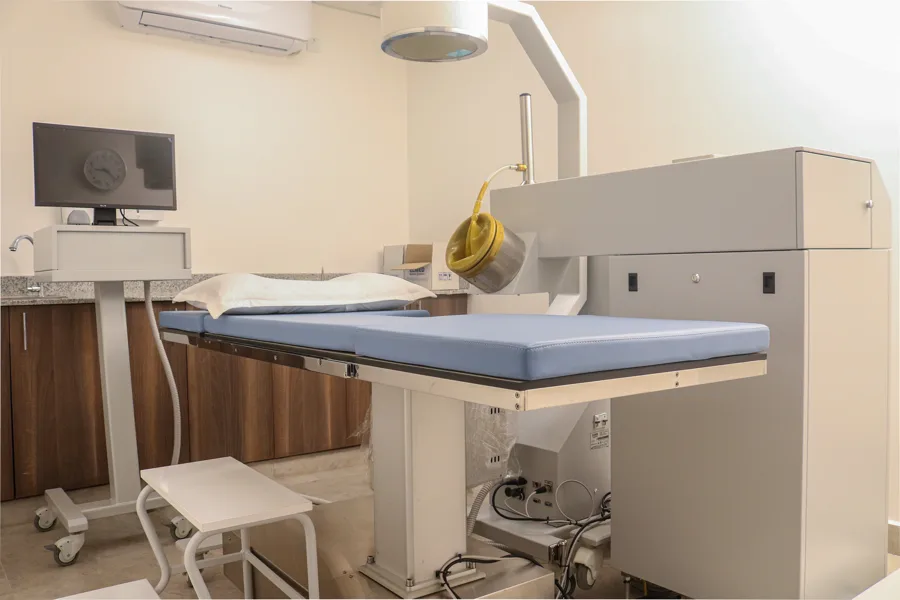
ESWL lithotripsy suite at URO-CARE Nairobi
Common Questions

ESWL — Frequently Asked Questions

Is ESWL painful?

Most patients feel a repetitive tapping or flicking sensation rather than pain. Light sedation and pain relief are given before the session to keep you comfortable throughout.

How long does the procedure take?

A typical session lasts 45–60 minutes. Including preparation and a short recovery period, you should plan for a half-day visit — and you go home the same day.

Will one session be enough?

Many stones clear after a single session. Larger or harder stones sometimes require a repeat treatment a few weeks later. Follow-up imaging tells us exactly how your stone responded.

What happens to the stone fragments?

The shock waves reduce the stone to fine, sand-like fragments that pass naturally in your urine over the following days to weeks. Drinking plenty of water helps them along.

Are there side effects?

Mild flank soreness, light bruising of the skin, and traces of blood in the urine for a few days are common and expected. Serious complications are rare, and your specialist will discuss your individual risk profile before treatment.

Is ESWL covered by insurance?

We work with most major Kenyan insurance providers. Contact us with your insurance details on +254 112 268 709 and we will confirm your coverage before your appointment.

Don't live with kidney stone pain a day longer

Book a consultation with our stone specialists. Same-week appointments, no referral required — and if ESWL is right for you, treatment can often be scheduled within days.

Chat on WhatsApp
1