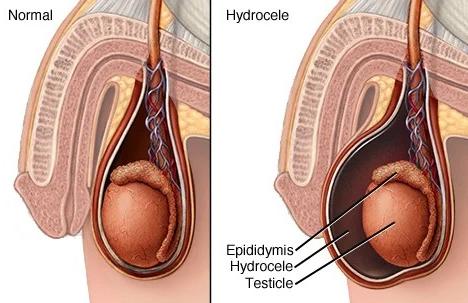
What Is a Hydrocele?
A hydrocele is a sac of fluid that forms around a testicle, causing the scrotum to swell. In a healthy scrotum a small amount of fluid is constantly produced and reabsorbed in balance. A hydrocele develops when that balance is disrupted and fluid accumulates faster than the body can drain it.
How it feels
A soft, smooth, fluid-filled swelling on one or both sides of the scrotum. It is usually painless and may change size through the day, often becoming larger in the evening after long periods of standing.
Who it affects
Hydrocele is most common in newborn boys, where it typically resolves on its own within the first year, and in men over 50, where it tends to develop gradually.
Is it serious?
On its own a hydrocele is not dangerous. However, similar swelling can sometimes be caused by a hernia or, rarely, a testicular tumour, which is why a proper examination matters even when the swelling seems harmless.
Early-Stage Hydrocele in Older Men
In men over 50 a hydrocele often develops slowly, and the earliest signs are easy to dismiss as part of getting older. Recognising them early makes treatment simpler and rules out other causes sooner.
- A mild, painless heaviness on one side of the scrotum that comes and goes
- Slight swelling that seems more noticeable by the end of the day
- A feeling of fullness when sitting for long periods, easing overnight
- Skin over the scrotum appears smooth and stretched, without redness
- Mild discomfort during long walks or standing, rather than sharp pain
- Gradual increase in size over months, rather than sudden onset
When to See a Doctor
Most hydroceles are harmless, but certain signs call for prompt evaluation to rule out conditions that need urgent care.
See a urologist promptly if
- Swelling appears suddenly or grows within hours
- There is significant pain, tenderness, or fever
- You feel a firm, hard lump within the testicle itself
- Swelling occurs after an injury to the groin
- There is redness, warmth, or the skin looks stretched and shiny
A routine visit is usually enough if
The swelling is soft, painless, and has developed gradually over weeks or months, with no fever, redness, or sudden change. A routine consultation still helps confirm the diagnosis and check whether any treatment is needed at all.
What Causes Hydrocele?
A hydrocele can develop for several reasons, depending on age and health history.
Incomplete canal closure
In newborns, a canal that normally seals before birth stays open, allowing fluid to pass into the scrotum.
Trauma to the scrotum
A direct knock or injury can trigger fluid build-up as part of the body's healing response.
Inflammation of the testicle or epididymis
Conditions such as epididymitis or orchitis can cause fluid to accumulate around the testicle.
Prior groin or scrotal surgery
Procedures such as hernia repair can occasionally disrupt normal fluid drainage.
Reduced fluid reabsorption
With age the membrane around the testicle can reabsorb fluid less efficiently, allowing it to build up gradually.
No identifiable cause
In many adult cases no clear trigger is found and the hydrocele simply develops on its own.
How Hydrocele Is Treated
Treatment depends on the size of the hydrocele, your symptoms, and whether it is affecting daily life. Your specialist will recommend the most conservative option that solves the problem.
Small, painless hydroceles often need no treatment at all, just periodic monitoring. In infants most resolve on their own within the first year of life.
Fluid can be drawn off with a fine needle for temporary relief in selected cases. Fluid often re-accumulates, so this is usually a bridge rather than a cure.
The definitive repair: a short day-case procedure that removes or repositions the fluid sac. Performed at URO-CARE with same-day discharge and a straightforward recovery.
Not sure if it is a hydrocele?
A same-week ultrasound and consultation can confirm it in one visit.
Hydrocele: Frequently Asked Questions
In adults, hydrocele commonly develops after minor injury, infection or inflammation of the testicle or epididymis, following surgery in the groin area, or with no identifiable cause at all. In newborns it usually results from incomplete closure of a canal during development.
See a urologist promptly if swelling appears suddenly, is painful, grows quickly, is accompanied by fever, or if you notice a firm lump within the testicle itself. These can signal conditions that need urgent evaluation, separate from a simple hydrocele.
Yes. Hydroceles become more common with age, often appearing gradually after 50, sometimes linked to minor injury, past infection, or reduced drainage of scrotal fluid over time.
In infants, most hydroceles resolve without treatment within the first year of life. In adults they rarely disappear on their own, though small and painless ones often need no treatment beyond periodic monitoring.
Hydrocelectomy is usually a day-case procedure with same-day discharge. Most patients return to desk-based work within about a week and to heavier physical work or exercise after two to four weeks, guided by their surgeon.
A hydrocele on its own does not usually affect fertility. Very large or long-standing hydroceles can occasionally cause discomfort or pressure, and any underlying infection or inflammation that caused it may need treating in its own right.